
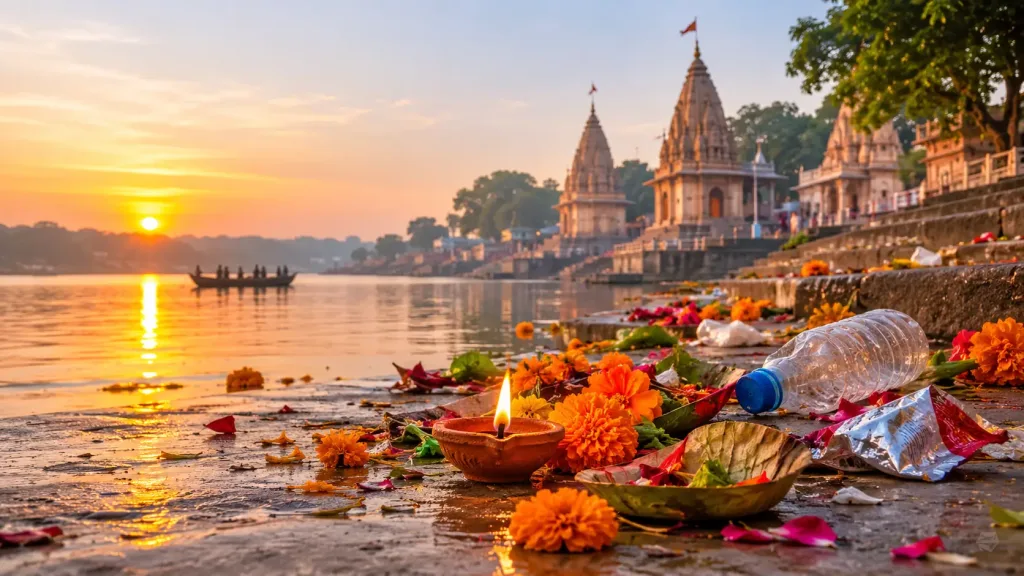
India is a land of festivals, traditions and faith. Every celebration brings people together, fills our streets with joy and connects us with our culture. But have we ever stopped to think about what happens after the celebrations end?
Once the crowds leave, what remains on our roads, beaches, riverbanks and ghats? Let us look at some of our major festivals and religious gatherings.
1. Ganesh Visarjan
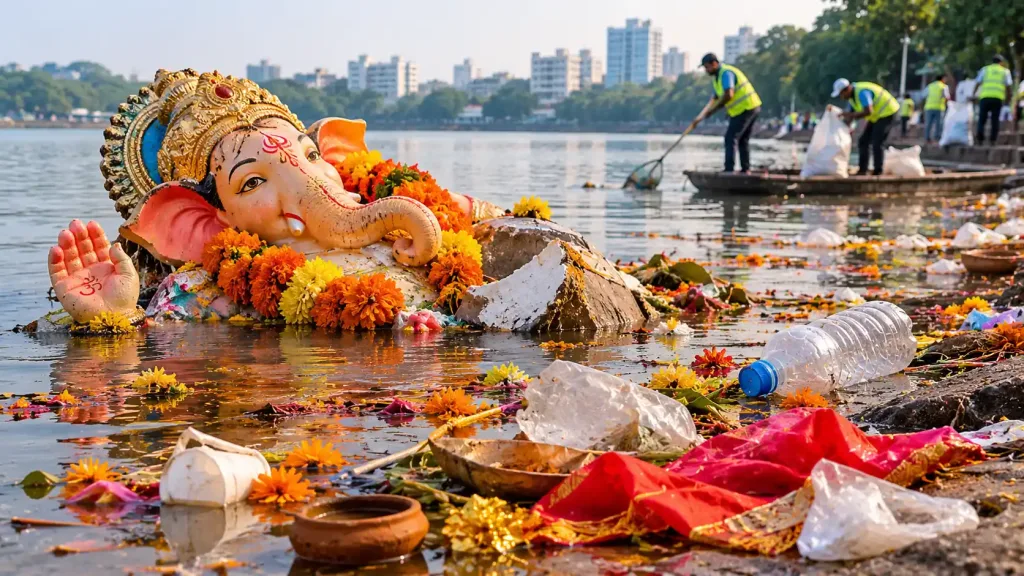
After Ganpati Visarjan, broken idols, Plaster of Paris (POP), plastic decorations, flowers and other puja materials are often left in lakes, rivers and the sea. These materials can harm aquatic life and affect water quality. In Mumbai, around 1,982 metric tonnes of POP remnants were collected after the 2025 Ganesh festival.
2. Devi Visarjan
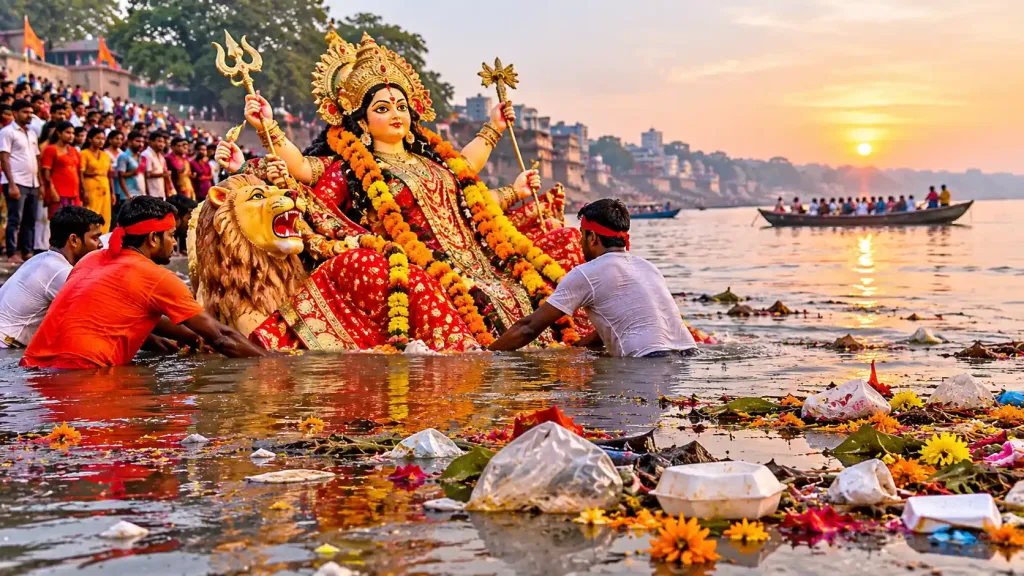
After Navratri and Durga Puja, rivers and ghats are often left with idol remains, bamboo frames, flowers, cloth, thermocol and decorative materials. These need to be removed and disposed of properly instead of being left in the water.
3. Chhath Puja
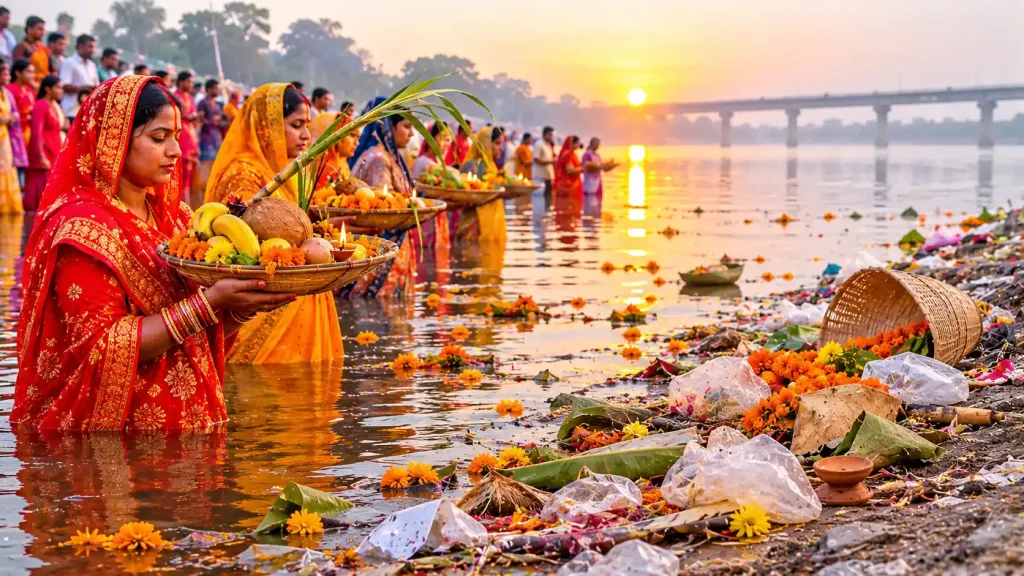
During Chhath Puja, devotees gather at rivers, ponds and lakes to offer prayers to the setting and rising Sun. But after the rituals, plastic bags, disposable plates, leftover food, flowers and other offerings can remain on the riverbanks and in the water. The same water that we consider sacred deserves our care and respect.
4. Ashadhi Wari – Pandharpur
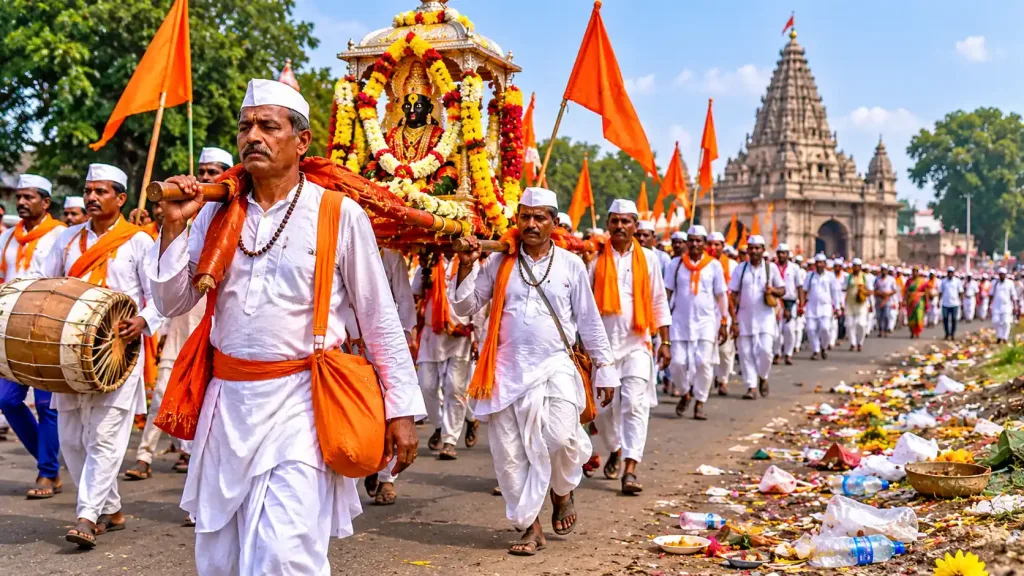
Lakhs of Warkaris walk towards Pandharpur with devotion to Lord Vitthal. The Wari is a beautiful example of faith and unity. However, such a large gathering also creates pressure on roads, public spaces and the Chandrabhaga riverbank. Food packaging, plastic bottles and other waste need proper collection and disposal after the pilgrimage.
5. Kanwar Yatra – Uttarakhand
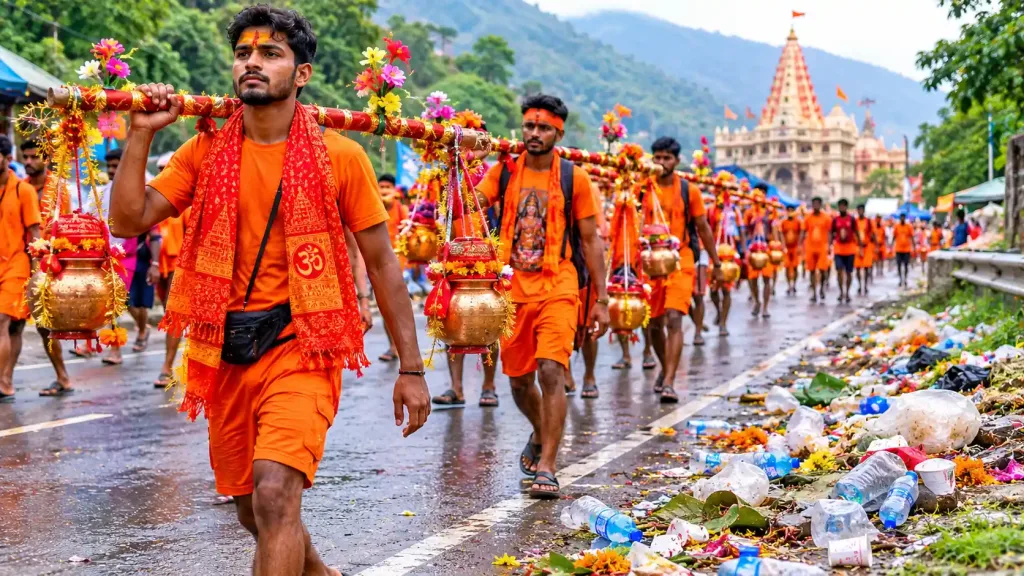
During the Kanwar Yatra, millions of devotees visit Haridwar to collect holy Ganga water. After the yatra, roads, ghats and gathering areas face a huge waste-management challenge. In 2026, around 7,000 metric tonnes of waste were reported after the yatra. Plastic sheets, bottles, discarded clothes and other waste add to the burden.
6. Chhota Char Dham Yatra
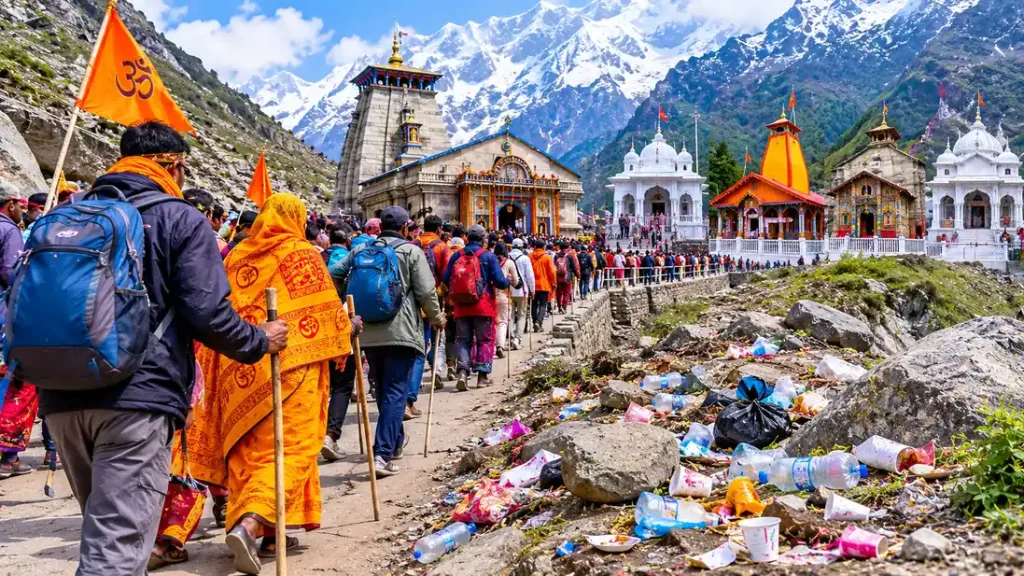
Yamunotri, Gangotri, Kedarnath and Badrinath attract lakhs of pilgrims every year. These Himalayan destinations are naturally beautiful and environmentally sensitive. Plastic bottles, food wrappers and other waste left along roads and trekking routes can damage the surroundings. A 2023 environmental report recorded over 10,000 metric tonnes of dry waste, largely plastic, across Haridwar and the Char Dham region during the 2021–22 pilgrimage season.
7. Haridwar and Rishikesh – The Sacred Ganga
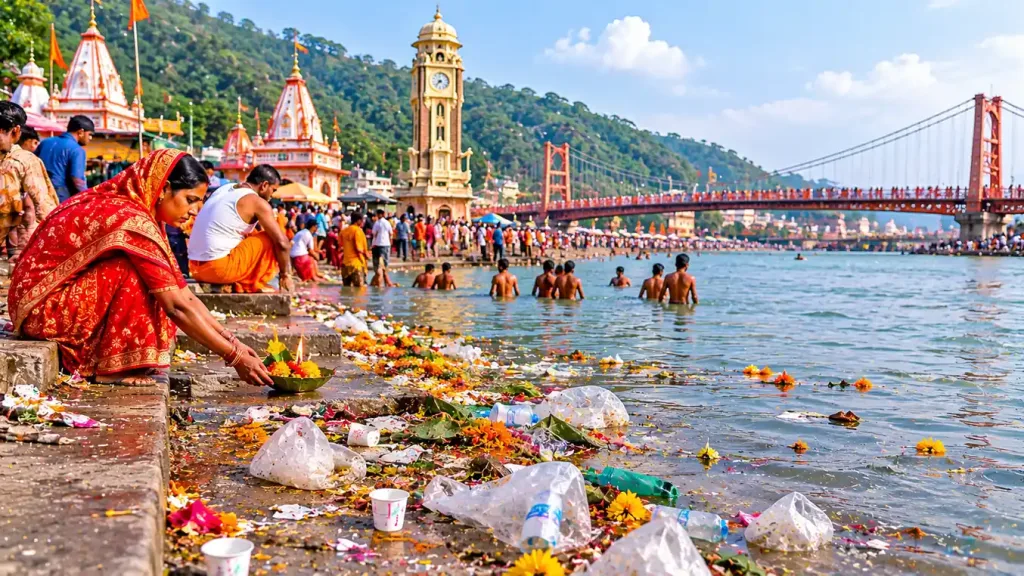
Haridwar and Rishikesh hold immense spiritual importance. People visit throughout the year for holy dips, prayers, Ganga Aarti, yoga and meditation. But continuous crowds, untreated sewage, plastic and religious offerings put pressure on the river.
A CAG audit reported a 32-fold rise in coliform bacteria between Devprayag and Haridwar by October 2023. This reminds us that keeping the Ganga clean requires more than occasional cleaning drives.
8. Maha Kumbh – Triveni Sangam, Prayagraj
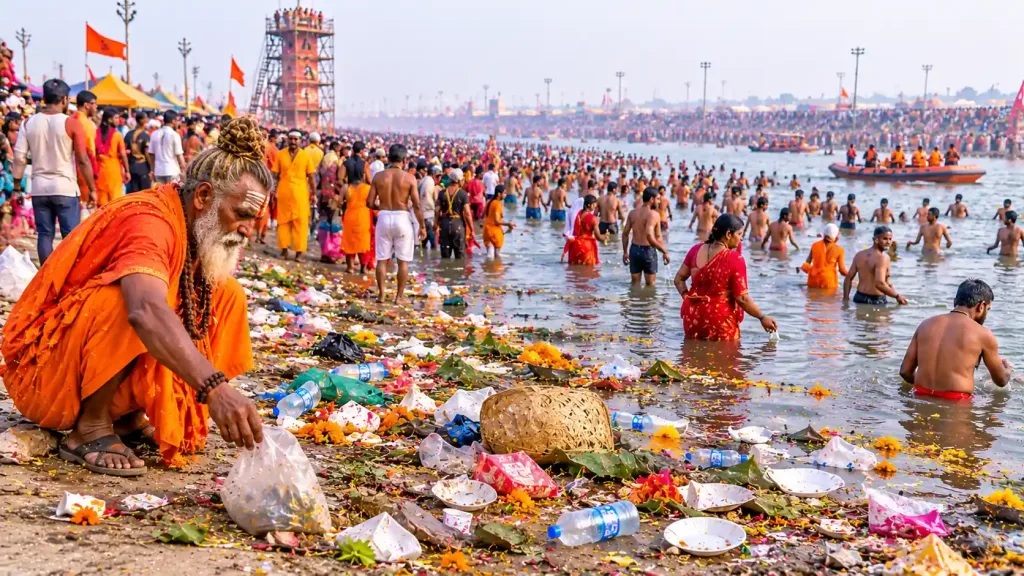
The Maha Kumbh brings millions of devotees to the Triveni Sangam, where the Ganga, Yamuna and the believed-to-be-mythical Saraswati meet. During Maha Kumbh 2025, more than two crore devotees took a holy dip on one major bathing day. Flowers, clothes, prasad and other waste were left behind, requiring an overnight cleaning drive. Trash-skimmer machines were also reported to remove 10–15 tonnes of waste daily from the rivers.
Such a sacred gathering should also inspire us to protect the rivers that bring people together.
9. Puri Rath Yatra
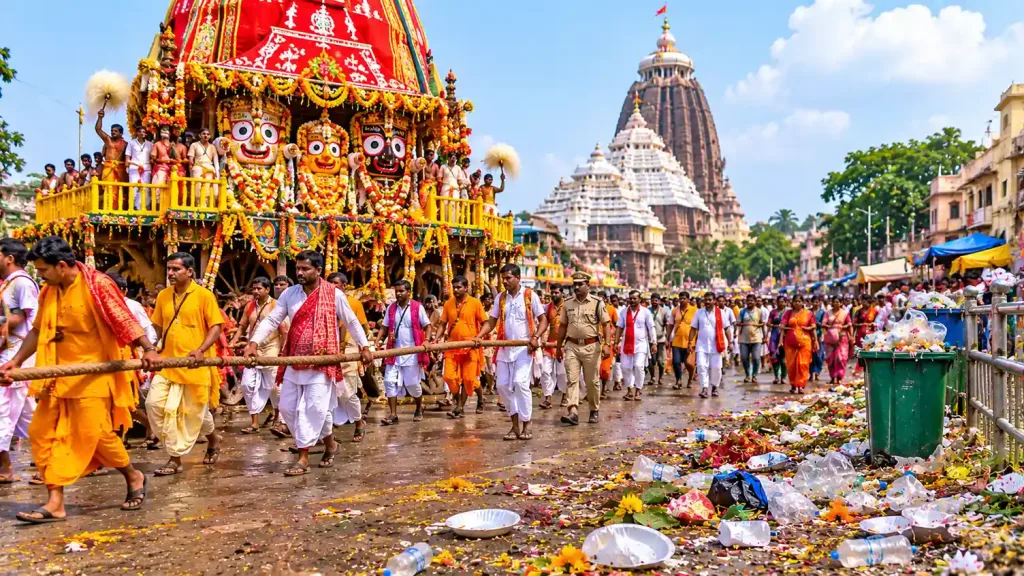
The world-famous Rath Yatra of Lord Jagannath attracts lakhs of devotees to Puri. After the chariots pass and the crowds disperse, the roads and gathering areas can be covered with plastic water bottles, food packets, disposable cups and footwear. In 2024, the administration planned organised collection and recycling of plastic bottles, with estimates of more than 30 lakh bottles during the festival period.
10. Kashi Ghat Aartis – Varanasi
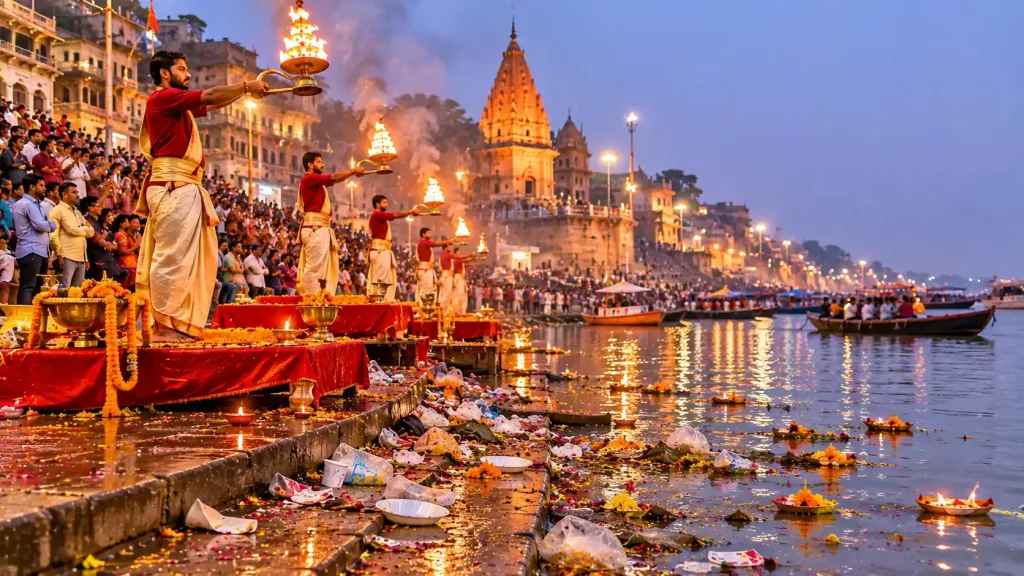
The Ganga Aarti at Dashashwamedh Ghat and other ghats of Kashi is a beautiful expression of devotion. Thousands gather every evening to pray to Maa Ganga. But daily crowds also mean flowers, diya remains, leaf plates, plastic and other offerings can collect along the ghats and enter the river. If we worship the Ganga every day, keeping her clean should also be part of our daily responsibility.
11. Holi – Celebrated Across India
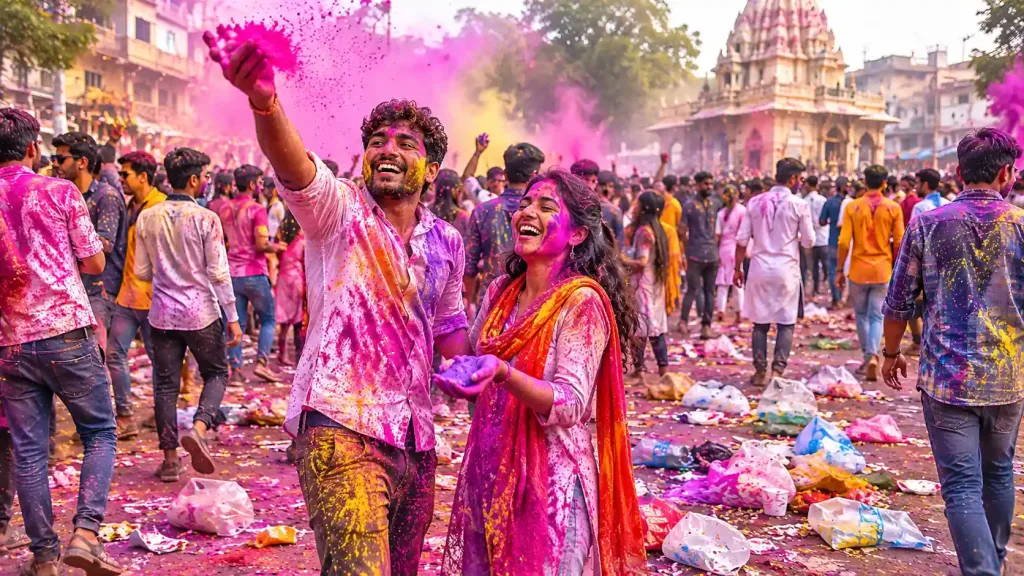
Holi spreads happiness through colours, music and togetherness. But after the celebrations, streets and public spaces are often left with plastic water balloons, packets, disposable plates and other waste. Chemical-based colours can also affect skin, soil and water when washed into drains and water bodies. Excessive use of water during celebrations adds another concern. We can enjoy Holi with natural colours, less water and responsible waste disposal.
12. Diwali – The Festival of Lights
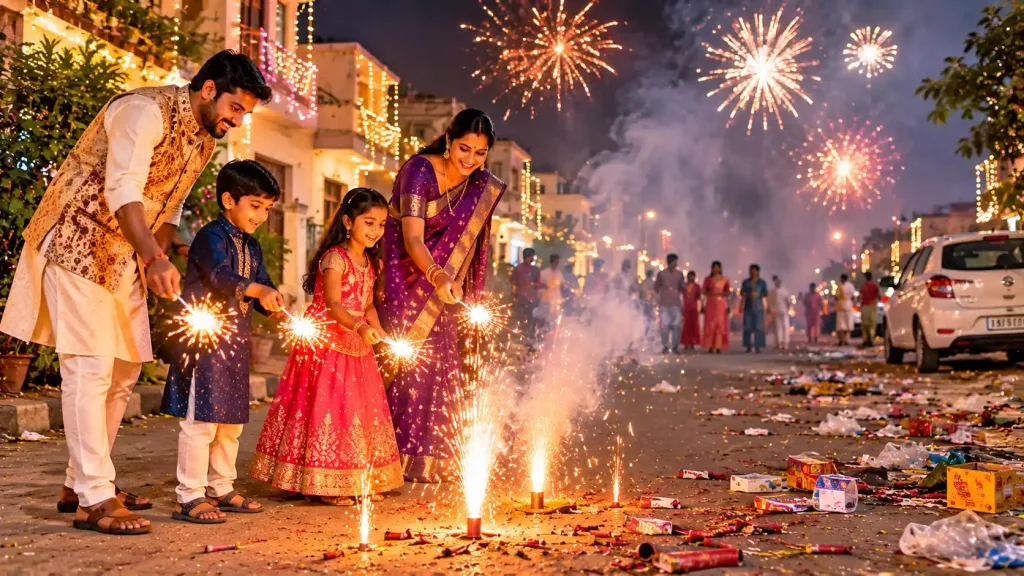
Diwali celebrates light, hope and positivity. But after the fireworks, streets are covered with burnt crackers, paper, plastic wrappers and other waste. Firecrackers release smoke and harmful particles into the air and create loud noise, affecting children, senior citizens, animals and people with health concerns. Maharashtra Pollution Control Board reports have highlighted the air and noise pollution caused by firecrackers.
A festival of lights should not leave behind darkness in our air.
A Question We Must Ask Ourselves
Every year, NGOs, volunteers, municipal workers and government departments organise clean-up drives after festivals and religious gatherings. Their efforts are important and deserve appreciation. But can they keep cleaning everything if we continue to leave waste behind?
As Indians, isn’t it our duty to keep our country and its rivers clean?
We cannot pollute our rivers, roads, beaches and public spaces during celebrations and expect someone else to clean them afterwards. Faith and traditions teach us respect, gratitude and responsibility. Let us practise these values through our actions too.
We do not need to stop celebrating. We only need to celebrate responsibly.
Let our festivals leave behind memories of happiness, not mountains of waste. Let our devotion be reflected not only in our prayers, but also in how we protect nature.


